The first ten days of August each year are a time to remind ourselves about the effects of nuclear weapons.
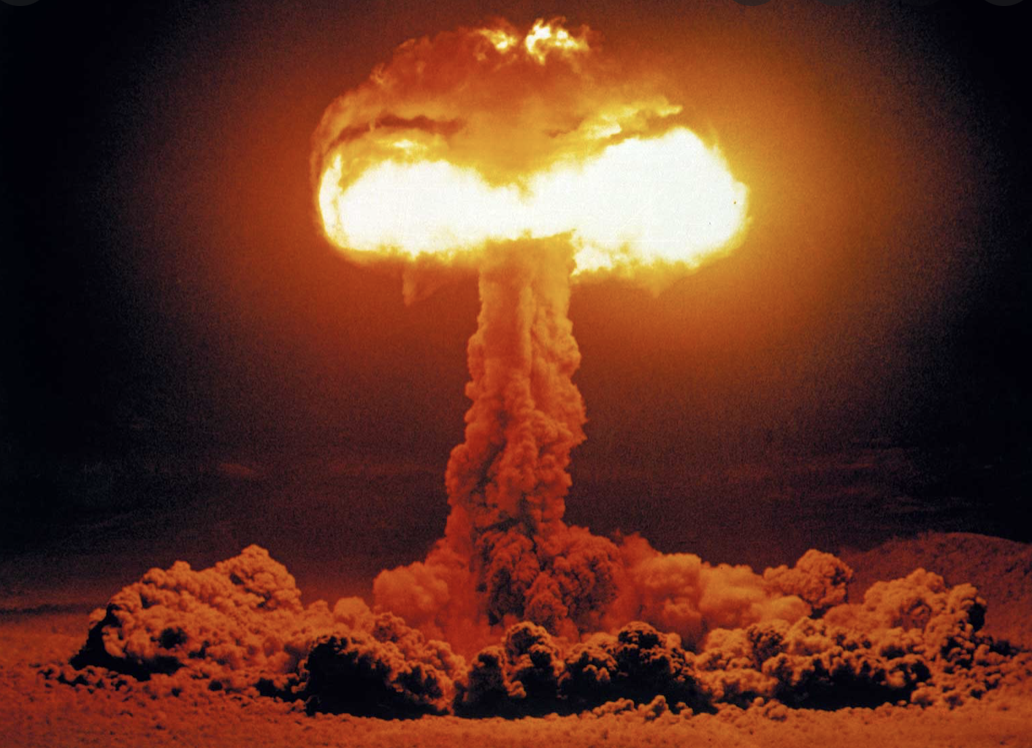
The first ten days of August each year are a time to remind ourselves about the effects of nuclear weapons.
On 6 and 9 August this year, we will mark the 80th anniversaries of the two occasions on which nuclear weapons have ever been used in war – the bombings of Hiroshima and Nagasaki.* Humanity has perpetrated and experienced a great deal of harm in the past eight decades but nuclear weapons have not been used again. Despite today’s widespread and intensifying perception of nuclear risk, the nuclear taboo survives.
That does not mean the nuclear problem has been solved, of course. It is “an encouraging fact”, as the Nobel Peace Prize Committee put it when giving the 2024 award to the movement of Japanese nuclear survivors (the hibakusha), Nihon Hidankyo. But not more than that. And honouring the hibakusha in this way was also intended as a wake-up call to those many people who until recently regarded nucleapons as yesterday’s problem.
Continue readingMost of NATO is involved, together with other states that are politically defined as part of the ‘West’, in the war in Ukraine by providing training and equipment for Ukraine’s armed forces and by supporting its government financially and politically. NATO is also involved in another way as part of the Russian narrative that presents the invasions of Ukraine in 2014 and 2022 as forced upon Russia by NATO’s incorporation of eastern European states since the end of the Cold War.
Russian spokespersons and others have treated NATO’s increasing membership as an exculpatory reason for, or a partial justification for, or a proximate cause of, or a contributing factor to Russia’s war against Ukraine. These are arguments worth looking into.
Continue readingThe world order is under pressure. For world peace and stability, the core security tasks of the key international organisations such as, above all, the UN and regional organizations such as the African Union (AU) and the Organization for Security and Co-operation in Europe (OSCE) are to manage and reduce conflict and to establish and build peace.
The problem is that for the past decade and more, the overall number and longevity of armed conflicts have increased along with their intractability. These armed conflicts that international mediation or conflict management seem unable to reach or influence are, alongside confrontation between the great powers and generally toxic geopolitics, key markers of the current disorder.
Continue readingA year after the renewed Russian invasion of Ukraine, China has come forward with a 12-point statement of its position on the political settlement of the Ukraine crisis. That, at least, is what is called by the Chinese Ministry of Foreign Affairs.
It is widely reported in the international news media as a peace plan. See, among others, AlJazeera, AP, BBC, CNN, DW, Guardian, New York Times, Reuters, Sky, Time (though it calls it a proposal).
But it is not a plan and China does not say it’s a plan – it’s a position according to the government and to CGTN, Beijing’s state-run English-language news channel (though, to be fair, CGTN joined the crowd and called it a plan on the second day of coverage). Further, it does not outline either what a peace settlement could consist of or a pathway for getting there. It is a statement of opinion that stays away from specifics about what its support for dialogue and negotiation could mean in practice.
And I think that in ramping up a statement of position into a peace plan that can then be criticised for lacking specifics, the news media are missing something.
Continue readingOn 21 February, Russian President Vladimir Putin announced that Russia would suspend its participation in New START, the last remaining nuclear arms control treaty between the world’s two nuclear superpowers: Russia and the United States.
This is a disappointing, unimaginative but unsurprising step from which nobody benefits.
And from which we all may lose. Including Russia.
Continue readingWestern commentators on Russia’s invasion of Ukraine and the ensuing war are frequently using the term, ‘quagmire’ – a bog, swamp or morass, from which, once you have entered, it is between hard and impossible to get out, as every move you make to free yourself sucks you deeper in. The term was widely used in the 1960s about the USA’s war in Vietnam.
As Lawrence Freedman has pointed out in one of his commentaries on the war, the term has a closely related partner – escalation, which might seem to a state stuck in a quagmire like the only way out. Both terms have a history and have considerable currency when analysing the problems and risks big states face in wars with smaller states.
But there is another metaphor from the time of the Vietnam War and all those arguments and debates, which I find even richer – the six-sided box. By invading Ukraine, Vladimir Putin has taken his country into a box from which it is hard to see the way out. And that is bad news for everyone.
Continue readingThe extension of the US-Russian New START agreement on strategic nuclear weapons was achieved through the exchange of two sets of diplomatic notes between the respective governments, on 26 January and 3 February. The process was super-straightforward. Both President Putin of Russia and Joe Biden while US President-elect made clear they would each favour extension. The day after inauguration President Biden officially confirmed the position. A few days later, it was done. This was the lowest of low-hanging fruit. Good to have gotten it out of the way (and stupid that the previous administration let it go down to the wire) but now the real work starts.
Continue readingAt a political rally on Saturday 20 October President Trump announced that the US will withdraw from the Intermediate Nuclear Forces (INF) Treaty of 1987. This confirms what has steadily unfolded over the last couple of years: the architecture of US-Russian nuclear arms control is crumbling. Continue reading
Two leading scholars of Russian policy have produced a fascinating and important analysis of how and why Russia might generate progress at the Geneva conference on Syria. Continue reading
 Dan Smith's blog