The nuclear challenge today and tomorrow

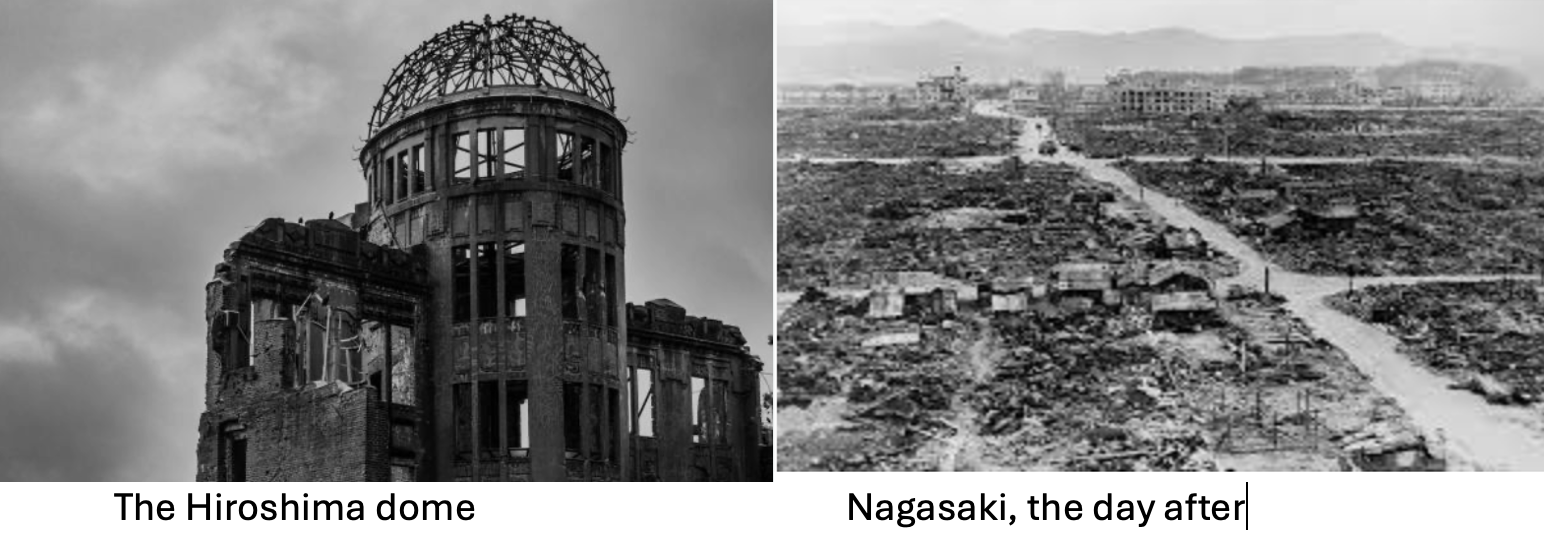
On 6 and 9 August this year, we will mark the 80th anniversaries of the two occasions on which nuclear weapons have ever been used in war – the bombings of Hiroshima and Nagasaki.* Humanity has perpetrated and experienced a great deal of harm in the past eight decades but nuclear weapons have not been used again. Despite today’s widespread and intensifying perception of nuclear risk, the nuclear taboo survives.

That does not mean the nuclear problem has been solved, of course. It is “an encouraging fact”, as the Nobel Peace Prize Committee put it when giving the 2024 award to the movement of Japanese nuclear survivors (the hibakusha), Nihon Hidankyo. But not more than that. And honouring the hibakusha in this way was also intended as a wake-up call to those many people who until recently regarded nucleapons as yesterday’s problem.

Continue reading
1945: 6 August, Hiroshima; 9 August, Nagasaki

Seventy nine years ago, twice and never since then, nuclear weapons were used in war. One bomb on Hiroshima, one bomb on Nagasaki. Blast, fire and radiation killed between 90,000 and 166,000 people in Hiroshima and from 60,000 to 80,000 in Nagasaki. Those are the estimated figures for deaths by the end of 1945; there have been additional deaths since as a result of radiation-caused cancers.

The destruction of Hiroshima and Nagasaki serves as reminder of what US President and wartime commander Dwight D Eisenhower called “that awful thing” can do. It reminds us that hostile rhetoric and throwaway remarks about using nuclear weapons are inhumanly irresponsible.

NB: Eisenhower, like almost all the most senior US military commanders of the time, believed using the nuclear bombs on Japan was unnecessary and ineffective; it was not the atomic bombing that persuaded Japan to surrender, they concluded, but the Soviet offensive in Manchuria.

Nagasaki: the 77th anniversary

Nagasaki was destroyed on 9 August 1945. It was three days after the Little Boy bomb was dropped on Hiroshima. Made of uranium and nicknamed Little Boy, it killed at least 80,000 people with its immediate effects of blast, fire and radioactivity. The bomb dropped on Nagasaki was named Fatman, was made of plutonium and killed some 40,000 people immediately.

Many analysts and commentators believe that, today, the risk of nuclear war is greater than it has ever been, even at the height of the Cold War. Quantifying and comparing risk is a complex business and comparisons are hard to make between different eras involving different protagonists. But nobody can deny that as long as nuclear weapons are used, there is a risk that one or more will again be used. And today’s toxic international politics make clear that the risk is significant.

In January this year, however, the five permanent members of the UN Security Council – China, France, Russia, the UK and the USA, all nuclear weapon states – jointly agreed that nuclear war can never be won and must never be fought. The statement deliberately reflected what Mikhail Gorbachev and Ronald Reagan, leaders of the USSR and USA, said in 1985.

Nagasaki, 9 August 1945, and Hiroshima three days earlier remain compelling reminders of why they were so right.

Continue reading

Hiroshima: the 77th anniversay

On 6 August 1945, a US Air Force bomber dropped a bomb known as “LIttle Boy” on the Japanese city of Hiroshima and destroyed it. This week, states party to the Nuclear Non-Proliferation Treaty (NPT) started a 4-week meeting in New York to review the Treaty, 52 years after it entered into force. The NPT is both an arms control and a disarmament treaty. Today, arms control is weak, disarmament seems far off, war rages in Ukraine and crisis builds over Taiwan. It is time to remember just how destructive Little Boy was. Retrospectively, it is clear the first nuclear weapon used in war was well-named for what happened to Hiroshima is the least of what we can expect if a nuclear war were to start today.

Continue reading