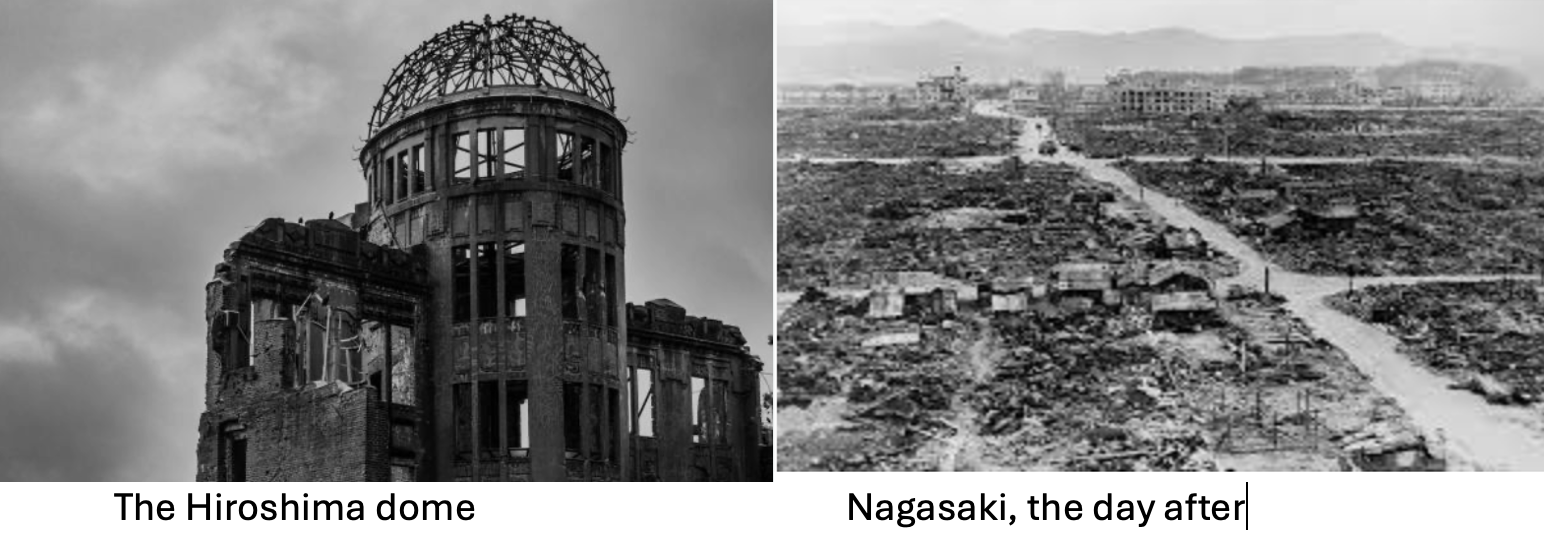
Seventy nine years ago, twice and never since then, nuclear weapons were used in war. One bomb on Hiroshima, one bomb on Nagasaki. Blast, fire and radiation killed between 90,000 and 166,000 people in Hiroshima and from 60,000 to 80,000 in Nagasaki. Those are the estimated figures for deaths by the end of 1945; there have been additional deaths since as a result of radiation-caused cancers.
The destruction of Hiroshima and Nagasaki serves as reminder of what US President and wartime commander Dwight D Eisenhower called “that awful thing” can do. It reminds us that hostile rhetoric and throwaway remarks about using nuclear weapons are inhumanly irresponsible.
NB: Eisenhower, like almost all the most senior US military commanders of the time, believed using the nuclear bombs on Japan was unnecessary and ineffective; it was not the atomic bombing that persuaded Japan to surrender, they concluded, but the Soviet offensive in Manchuria.
 Dan Smith's blog