The 10th edition of my book, The State of the World Atlas, is just out. In this short film I describe its contents and some of the big conclusions I draw not just from this edition but from the comparison with its predecessor, number 9 in 2013.
Author: Dan Smith
Progress – really? Really
On 8 October the 10th edition of my State of the World Atlas is published. It’s a big picture book with graphic presentation of statistics and trends worldwide. And the biggest of the big picture questions is, “Is progress real?” Short answer: yes.
Yes, I know. Look outside and it’s not pretty. During the last five years we have seen global geopolitics go from sour to toxic, unravelling nuclear arms control, and reducing the appetite for international cooperation to address problems that can only be solved by working together. The number of armed conflicts is higher than at any time since the end of the Cold War 30 years ago. Global military spending and the trade in major weapons are both at 30-year highs as well. The impact of climate change is increasing and increasingly dangerous. And on top of that there is the pandemic with its human, social, cultural and economic consequences. Can we still believe in progress? Really?
Continue readingLaw matters
A UK government minister has acknowledged that the next step in the country’s departure from the EU includes a plan to break international law. That decision that has led the government’s senior legal adviser to resign. As reported in the normally government-supporting Daily Telegraph, it appears he had already contemplated resigning over the government’s fast and loose way with the law.
Not surprisingly, the incident has caused outcry, both about the substance of the case and about the resulting damage to Britain’s international reputation. Bad and sad as that is, there is a bigger issue. This is only the latest example of a seriously worrying trend of disrespect for international law.
Continue readingEnvironment of Peace – an environment for progress
“I hope you are well.” A phrase that routinely starts each email now has special meaning. And not only in terms of physiological health but also psychological well being. And it’s not just the Covid-19 pandemic. Once you start thinking about it, where do you stop?
From toxic geopolitics to a many-sided environmental crisis (climate, biodiversity, ocean acidification, air pollution, zoonotic infection and more) to cyber vulnerability to capricious leaders who ignore facts, trash the truth and get away with it.
And yet…
Climate change, security, the UN – and EVIDENCE
All eyes are on the Covid-19 pandemic and the unfolding crisis it is causing, whose full dimensions are not yet clear. Meanwhile, there’s the climate crisis. It too has multiple, unfolding impacts about whose full details we cannot yet be sure. We should not lose sight of it, of course, and not only because it is very, very important. Some of what we are are (or should be) learning from the pandemic is relevant to the climate crisis, not least the widespread deficiency in resilience that Covid-19 is revealing.
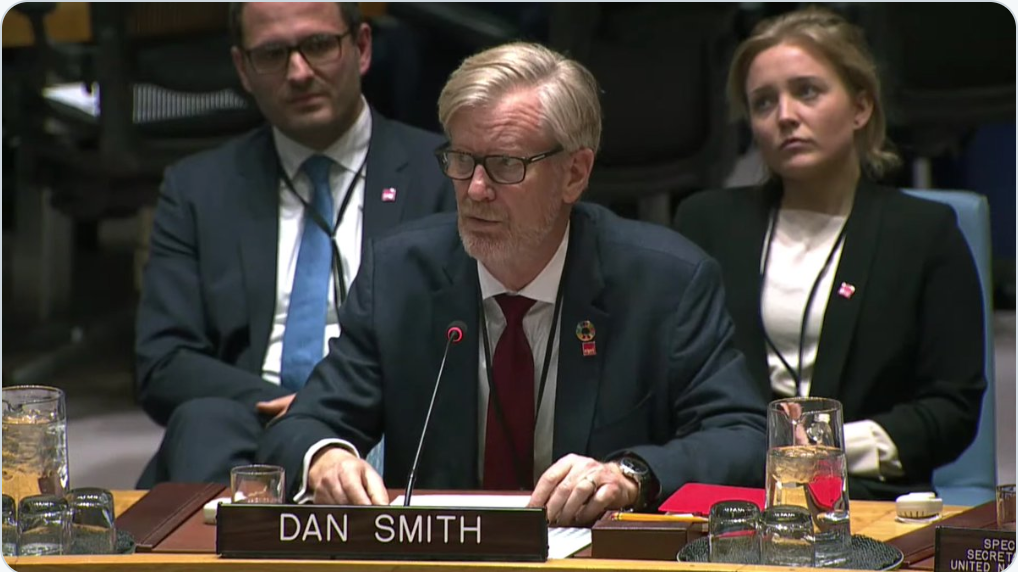
At French initiative, the UN Security Council held what is known as an Arria Formula debate on 22 April. This is a relatively informal meeting so the Council can be briefed on and discuss major issues. The meeting was virtual and I joined Under-Secretary-General Rosemary DiCarlo and International Crisis Group President, Robert Malley, to provide the initial briefings, after which some 23 representatives of member states plus the representatives of the African Union and the European Union also spoke.
Here, in more formal tones than I normally use in this blog but rather less formally than my last UNSC briefing in February, is what I said.
Covid, conflict, climate – and our crying need to be more resilient
Covid-19 has implications not only for health, well-being and prosperity but also for security and peace. The impact of the virus on war torn societies could be devastating, whether the scene is of massive physical destruction as in Syria, or the rampaging power of militias, jihadi groups and criminal gangs as in parts of the Sahel and Horn of Africa. Ramping up the humanitarian response, even though the big humanitarian headquarters are themselves part of the general lockdown, is one necessity. The UN Secretary-General’s call for a global ceasefire is a second one – though whether the call will be heeded, heaven knows. Beyond that the Covid-19 virus has revealed a worrying and widespread lack of social and political resilience. Continue reading
Somalia – a difficult climate for peacebuilding
Somalia is showing encouraging signs of emerging from three decades of chaos and mayhem that themselves followed two decades of dictatorship and one of civil war. Problems abound still and there are over 5 million people in the country who need humanitarian assistance and well over 2 million displaced people. As well as trying to win territory back from the al-Shabab terrorists, the government and its regional and international supporters have to meet people’s basic needs, develop the economy and establish some kind of political normalcy with critically elections planned for this year.
Exerting pressure on all this and making it harder is climate change and an average of one natural disaster a year for the last 30 years ( 12 serious droughts and 18 major floods). SIPRI published a report in late 2019 – Climate-related security risks and peacebuilding in Somalia by Florian Krampe and Karolina Eklöw – and the Belgian Presidency of the UN Security Council invited me to brief the Council about the issues on 24 February as part of their session on the situation in the country.
What follows – in perhaps a somewhat more formal tone than readers of this blog are generally used to – is what I said in my briefing.
The Trump administration on Israel and Palestine: is it a new peace plan?
We live in troubled and troubling times. Though we can, if we look, find reasons for optimism, many indicators are pointing in the wrong direction – more armed conflicts, more military spending, more arms trading. Worse, this unfolds against a seriously concerning background of long-term trends: increasingly toxic geopolitics, the crumbling of arms control and the climate crisis. The doomsday clock of the Bulletin of Atomic Scientists has moved 20 seconds closer to midnight; it has never been closer.
Amid the gloom, would it not be a welcome relief for a new peace vision for the Middle East to be launched, to resolve the Israel-Palestine conflict, and open the door to a new possibility of political and social progress in the region?
Yes it would. But…
Nine items of evidence for optimism
It’s that time of year, right? In fact, that time of the decade – the cusp between one and the next. From the teens to the twenties. So it’s time for my review of the last (what went wrong) and a forward perspective over what’s coming (trends to watch). Except, no.
Recently I asked a group of eminent and wise people for reasons for optimism. There is these days a bias towards pessimism that is simultaneously understandable, debilitating and tedious. I wanted to push back and get eminent wise help in doing so.
Continue reading
Climate change, human rights and security
The UN’s Climate Action Summit is an effort to raise the global level of ambition to address the deepening climate crisis by encouraging governments to go further in reducing carbon emissions and in providing finance to meet the challenges. It is altogether welcome. But it is striking that the preparation for the summit and the key messages going into and coming out of it have maintained a steadfast silence about the issue of security. Continue reading

