My previous post makes an argument that regular readers of this blog will find familiar: the challenge of ecological disruption including climate change crosses national boundaries and can only be tackled by international cooperation. It is not a problem that any single country, however rich, can solve alone. It is the superordinate challenge of our time and one part of the difficulty of rising to it is that, at the very time when we need a world order with strong institutions encouraging, facilitating and streamlining international cooperation, they are weakening. Deteriorating relations and increasing hostility between the great powers and their respective allies are undermining the ability of world order institutions to protect peace and security and get in the way of working productively on climate change and other issues. In the face of that, how can we do cooperation?
To the pessimism that might produce, I have a simple response. If international cooperation is necessary it has to be possible because the alternative is unacceptable. And if it is possible on the ecological crisis, I’m now going to argue, it’s possible in other areas as well.
This post is the next to last in a series on the shaky state of the world order. It is based on the introductory chapter to the recently released SIPRI Yearbook 2024.
Maybe eccentric and out of tune but necessary
I do sometimes wonder if my emphasis on the need for cooperation isn’t just a bit eccentric. It feels out of tune in today’s global political context, whose spirit seems more accurately reflected in an article by a rightly respected commentator on international affairs that I read just before sitting down to write this, headlined, ‘New wars, old wars, famine, panic everywhere.’
And maybe thinking about cooperation in today’s international context is eccentric and discordant. But it is also necessary. So it had better be possible.
Ecological disruption is undermining the conditions for a peaceful life in many places. That effect and its impact will spread. It is an unavoidable challenge to stability and security. It is therefore equally unavoidable that international cooperation is henceforth the key to security. Cooperation, as been obvious for half a decade and more, is the new realism in international politics.
And ecological disruption is not the only issue in which this logic applies. So could cooperation grow for other aspects of international interactions and relations? Could it thereby become something of a habit? Perhaps not for all states across all divides of conflict, rivalries and entrenched hostility, but among enough to make a difference?
For cooperation to be possible, the issue to be addressed must have, it seems to me, two attributes. It must be a sphere in which all or most states and their populations are active and have an interest. And it must be a sphere of shared vulnerability. After that, it’s up to people to care, opinion to form, policy to be shaped and leaders to act. In addition to ecological disruption, three such areas are trade, cyberspace and pandemic risk.
International trade
Trade is how most of us get what we use and consume. International trade is a large and still growing part of that. Rough statistics show the world economy produces goods and services to the value of around 100 trillion US dollars with international trade being worth about 32 trillion.
When I think about international trade and its vulnerabilities, I think mostly about the sea.According to different estimates, some 80 to 90 per cent by volume of all world trade goes by sea, over 70 per cent by value.
Much of it passes through 14 major chokepoints – eight maritime and six on inland waterways. Of these 14 chokepoints in water-borne international trade, 13 have been disrupted this century because of violent conflict or extreme weather events, which are becoming more frequent due to climate change.
Maritime trade keeps us supplied with staple foods. Each year, ships transport across the sea enough maize, wheat, rice and soybean to feed approximately 2.8 billion people. Of the key chokepoints, the Panama Canal and Strait of Malacca (including the Singapore Strait) are especially important for grain; over a quarter of global soybean exports go through the Strait of Malacca; and, at least until 2022 and Russia’s renewed invasion of Ukraine, a fifth of global wheat exports went through the Bosphorus and Dardanelles.
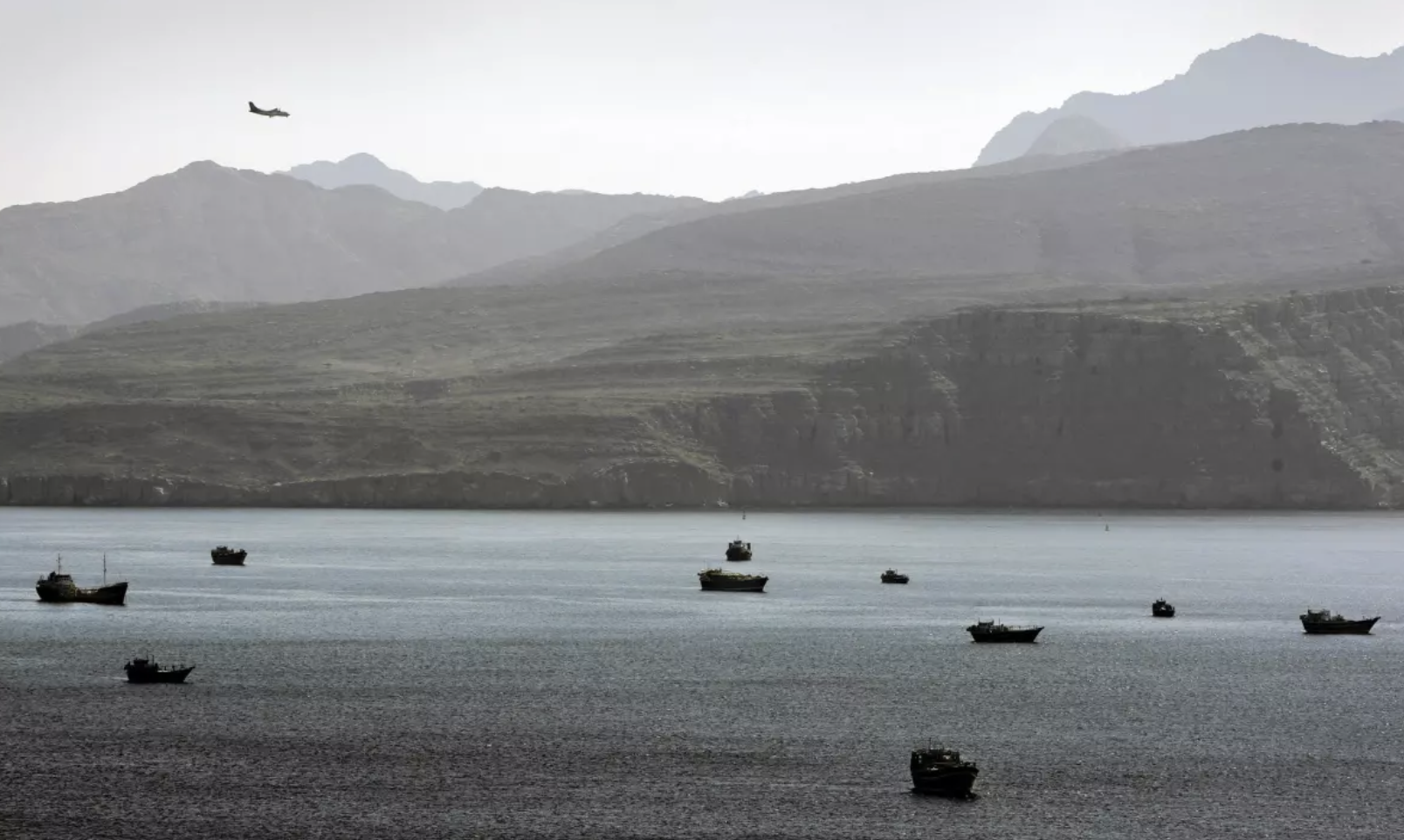
A great deal of energy travels by sea as well – just under 2 billion tonnes of crude oil each year, out of a total global output of 4.5 billion tonnes. The key chokepoint for oil is the Straits of Hormuz in the conflict-affected Gulf region—around one-third of the global supply of crude oil goes through the Hormuz seaway, which consists of two lanes, each two miles wide, with a two-mile-wide safety gap between them.
The March 2021 case of the cargo ship Ever Given offers a vivid demonstration of the fragilities and risks in these chokepoints. The ship got stuck in the Suez Canal, reportedly because of a strong gust of wind, resulting in, by one estimate, 30 per cent of the world’s container traffic being delayed. Within days there was a queue of 369 ships waiting to go through the Canal. A quick estimate by an insurance company put the costs at about 9-10 billion US dollars per day; the Ever Given was re-floated after six days. But the vessel was intact. Consider how much harder it would have been to move if it had been seriously damaged by sabotage or missile attack so there was a risk of breaking up when an attempt was made to tow and re-float it.
There’s really no way out of the chokepoint problem except through cooperation between states who, whatever divides them, are united by the need to keep trade routes open. Some may think that the melting of Arctic Sea ice due to climate change will offer an alternative for them at least. The northern sea route (NSR) has opened up north of Siberia. In 2018 Chinese container ships took the NSR from Shanghai to Hamburg, reducing the length of the voyage by some 6000 miles (almost 10 000 km) compared to going via the Suez Canal. Russia plans for year-round commercial passage with new generation icebreakers keeping the sea clear. But the Russian forecast of 130 million tonnes going through the NSR by 2035 is tiny compared to the global total of 11 billion tons (10 billion tonnes) shipped annually. Not only is the NSR not a real alternative for any state in the short term, if today’s geopolitical climate persists, it will only be available to some. Western importers will worry about an overbearing Russian presence along the NSR and Chinese exporters will have to take those worries into account.
Other modes of transport are also vulnerable to disruption, such as oil pipelines. In 2021, for example, a ransomware cyber-attack forced the temporary closure of a pipeline carrying 45 per cent of the US east coast’s supply of diesel, petrol and jet fuel. The short-term effects included price increases, some US states declaring emergencies, and a reported total of 3500 petrol stations running dry. Incidents like this are a chilling indication of vulnerabilities that all states share in one form or another.
Cyberspace
Cyberspace is a site of contestation and competition – hacking, malware, sabotage, crime, misinformation, espionage – so is it especially eccentric to suggest it could also be a site of cooperation? Perhaps, but it’s also a site of shared vulnerability that nobody and no state can evade; in that sense, it’s like the climate sphere.
From Swedish supermarkets to the Irish health service to the WannaCry ransomware attacks in 2017 and 2018 and the SolarWinds hack in 2020 that penetrated thousands of organisations worldwide including government agencies, and including that 2021 shutdown of the US east coast pipeline, there are persistent reminders of the general rule that, the greater the reliance on cyber space, the greater the vulnerability
Coverage of cybercrime in the West can give the impression that it is only the West that is vulnerable and that, alongside regular criminals, it is state-backed groups in China, North Korea and Russia that do most to exploit cyber vulnerabilities. But there have also been cyber attacks in, for example, China and Russia that are much less well reported. Some recently reported incidents appear to target Russia because of its aggression against Ukraine, some using the same kind of decoy ransomware hiding a wiper (that wipes out data) as has been used against Ukraine. China has also been hit by major cyber attacks, including one originating in Russia. There are probably far more incidents than shown in the links in this paragraph but both China and Russia permit limited transparency. Just because they don’t report the problem very much, however, doesn’t mean they are immune to it.
Everyday transactions in many countries – salary payments, household purchases, travel arrangements, insurance, banking, pension contributions and payments – are increasingly conducted online, regularly needing virtual proof of identity (or do I mean, proof of virtual identity?). Communications, public utilities, traffic management on the road, railways and in the air – all depend on efficient use of cyberspace. All those activities, transactions and personal information – it’s all out there.

And it’s moving fast, getting more capable, offering more. This complicates things further. The pace of software development makes it hard for security measures to keep up. As in the case of the biosphere, the choices made in building modern societies are creating an increasingly precarious world.
There is an additional dimension to cyber vulnerability because the actual insecurity generated by cyber-dependence is not the only problem. Much of what goes wrong in cyberspace is accidental but there is always a temptation to attribute problems to hostile action by criminals or governments.
Cyberspace has physical locations—some in outer space in satellites, some in ground-based installations—and more than 90 per cent of all data travels at some point through ocean cables. From collisions with space debris to the consequences of extreme weather, these physical embodiments of cyberspace face a range of hazards. Among them, the role of human error is significant. There is now considerable concern about the false alerts generated by cyber security systems, with one estimate suggesting that 45 per cent of system downtime is unnecessary. Put together the frequency of accident and error with the understandable temptation to blame hostile others in a world of increasing hostility and mutual suspicion, and it becomes important to figure out how to handle incidents whose causes are unknown and avoid an escalatory response against, for example, another government, which may not have been responsible.
It would self-evidently be much easier, more efficient, cheaper and less risky to work together in handling cyber incidents of unknown or dubious origin and cause.
The next pandemic
In addition to the wider aspects of the ecological crisis, one issue that pretty obviously commends itself for improved cooperation is preparation against the next pandemic. The difficulty is that this would require increased transparency between health authorities and epidemiological experts of different countries, compared to the Covid-19 pandemic, and that raises issues at the heart of how governments handle information. Some governments, after all, restrict information more than others. Some spin more shamelessly than others. Whatever the origins of the SARS-CoV-2 virus, which remain contested, there is little doubt that early on, the Chinese authorities stepped in to sharply limit the amount of information Chinese doctors could communicate to the World Health Organization and to their colleagues in Europe and North America.
Cooperative preparation against the next pandemic should also include laying the groundwork for avoiding the vaccine nationalism that characterized the policies of many rich countries, with counterproductive results.

The stakes here are enormous. Covid-19 was pretty much a universal experience but it was not the perfect storm. Though it was very contagious, the vast majority of those infected recovered.
Looking into this, there are many shortcomings in the data on how many people died from Covid-19 due to, among other reasons, methodological shortcomings and the limited capacity of many national reporting systems. By October 2022, as the pandemic was coming to the end of its most virulent period outside of China, the confirmed death toll was just over 7 million, meaning those people who death was attributed solely to Covid-19. The World Health Organisation calculated that excess mortality during the pandemic period was 2.74 times the confirmed total, meaning that there were over 19 million deaths that were wholly or partly caused by the Covid-19 virus. The Economist‘s study, based on a model that takes prevalence of the disease as well as excess mortality into account, estimated 27.3 million Covid-related deaths.
The highest of these estimates is less than 4 per cent of all those infected – a recovery rate of better than 96 per cent, even when indirect causes and co-factors such as age or prior illness are taken into account.
Now consider what the figures would look like if the infectiousness of Covid-19 were combined with the 80-90 mortality rate of an orthoebolavirus, such as Ebola. And for those who know that Orthoebolaviruses are primarily found in sub-Saharan Africa, consider the impact of climate change and the consequent shift in geographical distribution of diseases.
There are at least three dimensions to the risks associated with next pandemic. One is the possible scale of deaths, perhaps many times greater than Covid-19’s 19–27 million. The second is the economic impact: in Covid-19’s first year, 2020, economic output fell in all bar 20 countries, including all major national economies except China, depressed wages in two-thirds of countries for which official data was available, and drove approximately 120 million people into extreme poverty. And the third dimension is the impact on peace. Taking a look at conflict trends in the past half-century, it seems the number of armed conflicts tends to increase a few years after a major economic disruption such as the oil price shock of the early-to-mid-1970s, the Asian financial crisis of 1997 and the global economic crisis of 2008–2009. Historically, furthermore, pandemics have been followed by periods of social unrest, political instability and heightened conflict.
A world that can’t cooperate
So – climate change, trade, cyberspace, the risk of the next pandemic – you would really think that a world that can’t cooperate on these issues needs its collective head examined, would you not? The mutual interest in cooperation on these questions is so strong that greater international cooperation is inevitable.
The anxious question that lies at the heart of this series of blogs is how. And therefore, by whom and on what terms.
More to follow.
 Dan Smith's blog