World order §7: Shared vulnerabilities demand cooperation

My previous post makes an argument that regular readers of this blog will find familiar: the challenge of ecological disruption including climate change crosses national boundaries and can only be tackled by international cooperation. It is not a problem that any single country, however rich, can solve alone. It is the superordinate challenge of our time and one part of the difficulty of rising to it is that, at the very time when we need a world order with strong institutions encouraging, facilitating and streamlining international cooperation, they are weakening. Deteriorating relations and increasing hostility between the great powers and their respective allies are undermining the ability of world order institutions to protect peace and security and get in the way of working productively on climate change and other issues. In the face of that, how can we do cooperation?

To the pessimism that might produce, I have a simple response. If international cooperation is necessary it has to be possible because the alternative is unacceptable. And if it is possible on the ecological crisis, I’m now going to argue, it’s possible in other areas as well.

This post is the next to last in a series on the shaky state of the world order. It is based on the introductory chapter to the recently released SIPRI Yearbook 2024.

Continue reading
World order §6: Ecological disruption and cooperation

Researchers, commentators and policy-makers are increasingly aware of the negative effects of climate change for peace and security. Climate change undermines conditions for peace and security for all, while increased conflict, disputation, instability and disorder add to the difficulties of arriving at agreements to slow down global warming. When we think about peace and security and about world order, climate change – and, by extension, the full spectrum of ecological disruption – should be in the centre of our attention.

Continue reading

1945: 6 August, Hiroshima; 9 August, Nagasaki

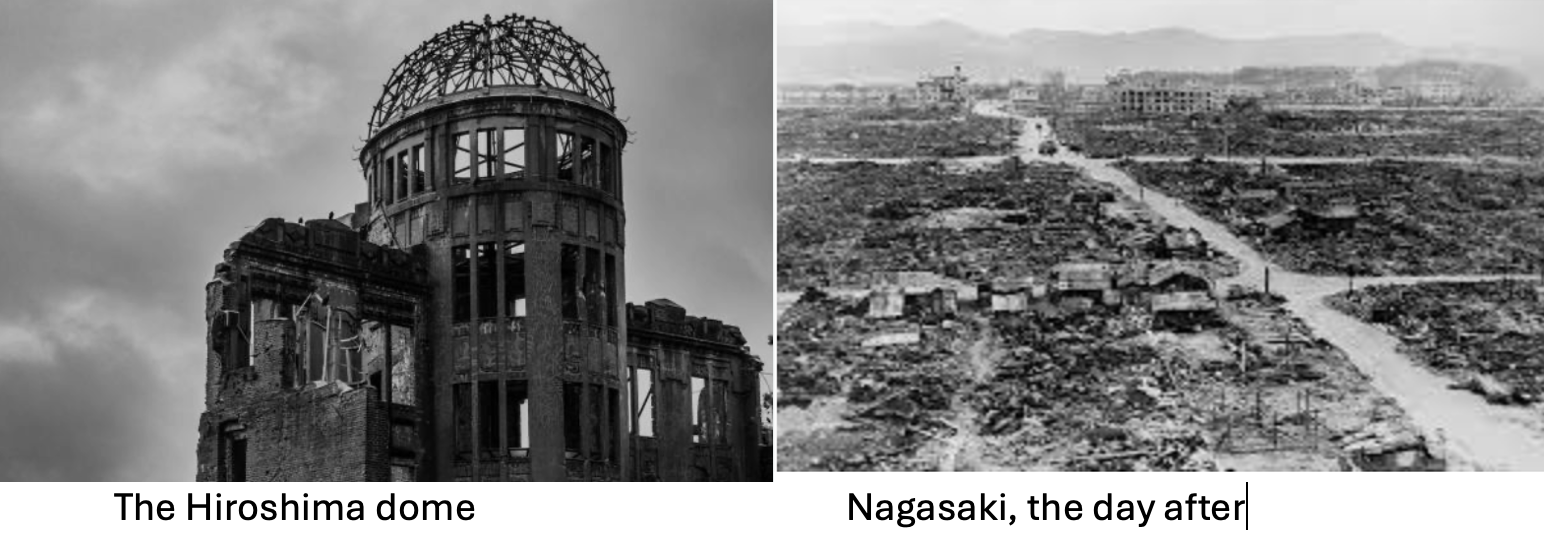
Seventy nine years ago, twice and never since then, nuclear weapons were used in war. One bomb on Hiroshima, one bomb on Nagasaki. Blast, fire and radiation killed between 90,000 and 166,000 people in Hiroshima and from 60,000 to 80,000 in Nagasaki. Those are the estimated figures for deaths by the end of 1945; there have been additional deaths since as a result of radiation-caused cancers.

The destruction of Hiroshima and Nagasaki serves as reminder of what US President and wartime commander Dwight D Eisenhower called “that awful thing” can do. It reminds us that hostile rhetoric and throwaway remarks about using nuclear weapons are inhumanly irresponsible.

NB: Eisenhower, like almost all the most senior US military commanders of the time, believed using the nuclear bombs on Japan was unnecessary and ineffective; it was not the atomic bombing that persuaded Japan to surrender, they concluded, but the Soviet offensive in Manchuria.